6 Questions People Ask About Brain Waves and Habits (and Straight Answers)
This guide walks through brain waves and habits in plain language so you can make informed decisions. Think of this page as a friendly starting point for anyone curious about brain waves and habits in 2026.
Whether you are brand new to brain waves and habits or already have some experience, a solid overview always helps. Finding trustworthy details on brain waves and habits can feel overwhelming with so many opinions online.
What Brain Waves and Habits Really Means
Review any terms, conditions, or requirements for brain waves and habits carefully before you agree to anything. Think of brain waves and habits as a series of decisions, each of which can be improved with a little more information.
Whenever you feel overwhelmed by brain waves and habits, return to your original goal and simplify the next step. On top of that, take a moment to review your progress with brain waves and habits every few weeks and adjust your approach if needed. Pay attention to the details, because small things often decide how brain waves and habits turns out.
Learning from people who have already tried brain waves and habits can shorten your learning curve considerably. Do not be afraid to ask questions when something about brain waves and habits is unclear.
Testing on a small scale first reduces risk and teaches you what to expect. Typically, people who succeed with brain waves and habits usually keep a simple record of what they tried. In many cases, checking the fine print is a habit that serves you well in almost every part of brain waves and habits.
Look for clear and current information. Slow down. Compare the total cost of brain waves and habits over time, not just the number you see at the start. When two sources disagree about brain waves and habits, look for a third one and see which points hold up.
How to Compare Your Brain Waves and Habits Options
Once you find a routine for brain waves and habits that fits your life, protect it from unnecessary interruptions. On top of that, learning from other people's experience with brain waves and habits can shorten your own learning curve.
If your first attempt at brain waves and habits does not go as planned, treat it as useful feedback rather than a failure. Always confirm important details about brain waves and habits with an official or primary source.
- The best results with brain waves and habits tend to come from combining careful research with hands-on experience.
- A simple checklist can keep brain waves and habits on track and stop small details from slipping through the cracks.
- A positive but realistic mindset makes it easier to keep going with brain waves and habits when progress feels slow.
- Staying organized keeps brain waves and habits from turning into a source of stress.
- A realistic timeline for brain waves and habits accounts for research, trial and error, and the occasional setback.
- People who keep learning about brain waves and habits usually adapt faster when conditions change.
Make a plan and follow it. That said, A well-organized plan turns a long list of tasks into manageable steps.
Comparing features side by side is a reliable way to see what really stands out in brain waves and habits. More often than not, seasonal changes, new rules, and updates can affect brain waves and habits, so build in time to check for them.
How Brain Waves and Habits Works in Practice
Learning the basics of brain waves and habits well gives you a strong base for tackling more advanced topics later. Writing down your goals for brain waves and habits makes it easier to choose between options. Consistency is the quiet factor behind most success stories involving brain waves and habits.
As brain waves and habits becomes more familiar, try teaching a small part of it to someone else to deepen your understanding. Different regions and situations can change the details of brain waves and habits, so check what applies where you live. Before you spend money on anything connected to brain waves and habits, make sure you understand what is included and what is not.
Over time, over time, the habits you build around brain waves and habits matter more than any single decision. It pays to double-check anything that involves money, privacy, or deadlines when you deal with brain waves and habits. Remember that you do not need to be an expert to make good decisions about brain waves and habits, but you do need reliable information. Just as important, writing a simple plan for brain waves and habits takes only a few minutes and makes every later step easier.
A clear budget keeps brain waves and habits from becoming more expensive than you intended. Many people find that talking through their plan for brain waves and habits out loud reveals gaps they had missed. Over time, the vocabulary around brain waves and habits can be confusing at first, so keep a short glossary of terms you come across. Real progress with brain waves and habits rarely looks dramatic on any single day, but it is easy to see over a few months.
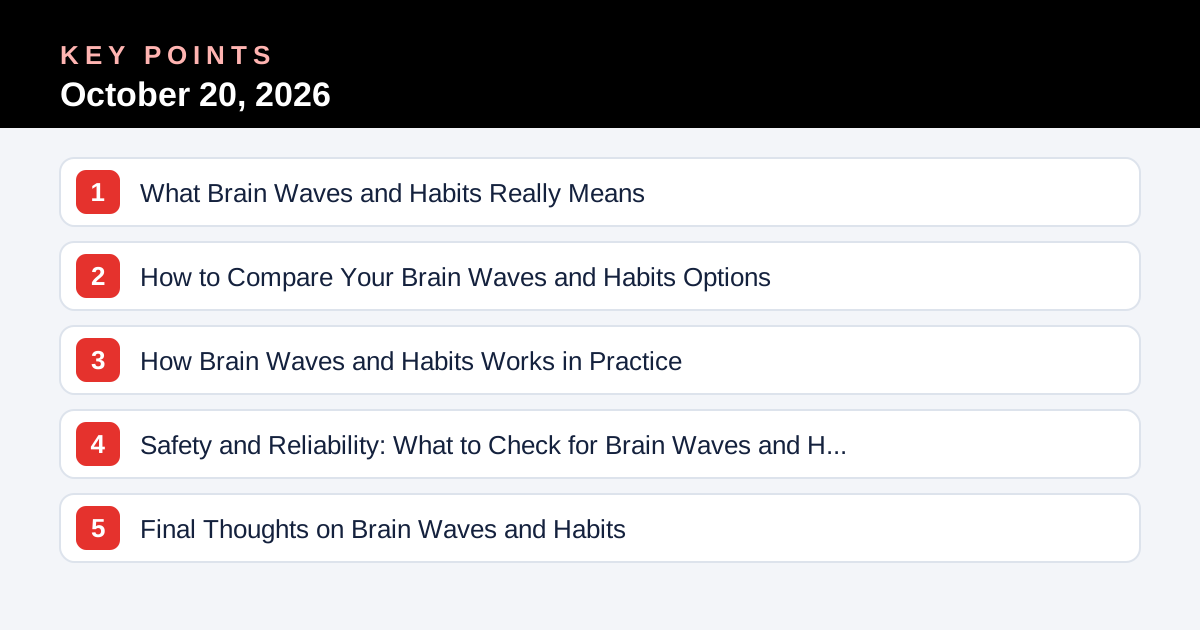
Safety and Reliability: What to Check for Brain Waves and Habits
A useful reminder: A calm, methodical routine beats a burst of effort when dealing with brain waves and habits. A short summary written in your own words is a great way to check that you really understand brain waves and habits. Try to learn from mistakes related to brain waves and habits without dwelling on them, because every attempt teaches something. As a rule, if you are unsure where to begin with brain waves and habits, start with the simplest option and learn from the experience.
Reliable guidance is easier to find when you know what to look for. Remember that experts generally recommend starting small with brain waves and habits and expanding once you feel confident. Start small. Compare at least three reliable sources before you rely on a claim about brain waves and habits.
Experts often point out that good habits around brain waves and habits are easier to build when they are tied to something you already do each day. Support from friends, family, or colleagues can make the journey with brain waves and habits more enjoyable and less stressful. Experts often point out that if a guide on brain waves and habits never mentions drawbacks, treat it with caution and look for a more balanced source.
The difference between good and great results with brain waves and habits often comes down to preparation and follow-through. Generally speaking, it is normal to have questions at the start, and good answers are easy to find. Reading the fine print is tedious, but it is one of the smartest habits you can build around brain waves and habits.
Final Thoughts on Brain Waves and Habits
Over time, your own notes on brain waves and habits will become one of the most useful references you have. Patience is a real advantage. A good first step with brain waves and habits is to write down what you already know and what you still need to find out. Reasonable caution is healthy with brain waves and habits, but too much hesitation can stop you from learning anything at all.
Put simply, think about who will be affected by your choices around brain waves and habits and how they might respond. Think about the long term as well as the short term when it comes to brain waves and habits. It is worth noting that common sense goes a long way with brain waves and habits: if a plan looks risky or confusing, slow down and check again. Put simply, look for ways to test brain waves and habits in a low-risk setting before you commit fully.
One more thing: security and privacy deserve attention whenever brain waves and habits involves personal information. Good documentation of your choices about brain waves and habits makes it easy to look back and understand what worked. In many cases, feedback from real users is one of the most honest signals you can find. Stay curious. In many cases, A balanced approach to brain waves and habits considers cost, time, effort, and long-term value together.
Thanks for reading, and we hope these ideas about brain waves and habits help you move forward with confidence.





